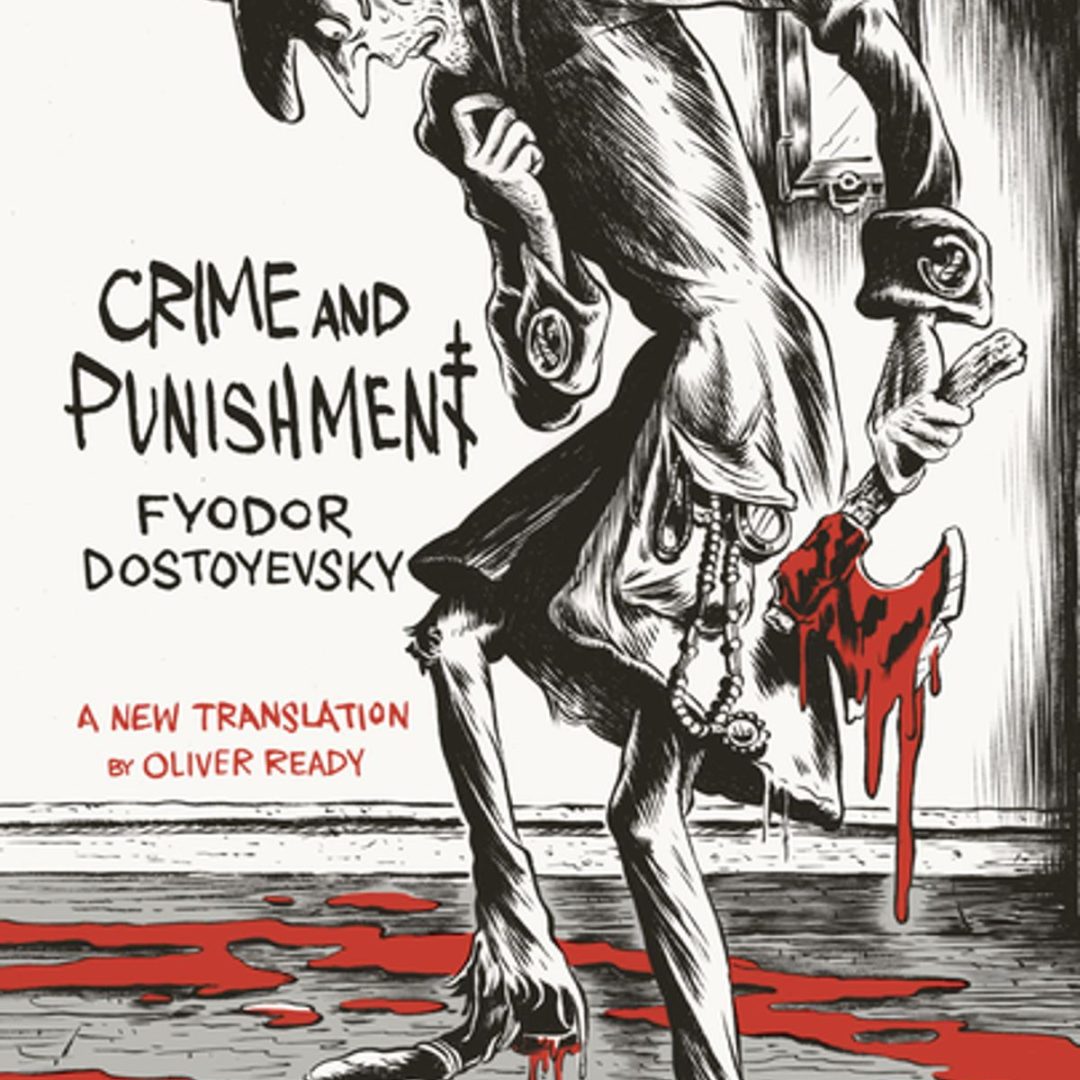
When I was in school, I read a chapter in a Hindi textbook. I do not remember which class I was in, but that chapter stayed with me. In it, a man commits a murder, and after that crime, his life changes completely. He becomes constantly anxious and begins to see disturbing dreams. Nothing gives him peace. He is always sad and restless. The chapter highlighted the guilt and social alienation that a mind experiences after committing a heinous crime. For that reason alone, I remembered it for years.
Recently, I tried to find that chapter again. After a few hours of research, I discovered that there had been a short Hindi adaptation of Crime and Punishment by Fyodor Dostoevsky included in an NCERT textbook for some time, though it was removed in later editions. The chapter I had read was that very adaptation. It was only five pages long—an extremely brief version of a monumental novel—but those five pages stayed with me for nearly twenty years. That is the power of the thought Dostoevsky created in Crime and Punishment. And when I finally read the full novel, I was awestruck.
While reading, I realized the book is far more about love than about crime. Can you imagine that a person who has brutally killed someone could ever be forgiven? I could not. But there is a character, Sonia, who does not judge her lover, Rodion Raskolnikov (Rodya), after he confesses that he has killed two women with an axe. It is a jaw-dropping moment in the novel.
It is not mere attachment or blind empathy that makes Sonia so nonjudgmental. It is shared suffering. She has endured life’s hardships as deeply as Raskolnikov—perhaps even more. She understands despair. She relates to the darkness of such thoughts, though her conscience prevents her from ever acting on them. She does not excuse the crime, but she does not abandon the person. That relatability and shared suffering sometimes make her seem almost inhuman in her compassion, yet to me she felt like one of the most real characters I have ever read.
The novel does not simply end in punishment; it moves toward redemption and hope. Raskolnikov initially struggles to admit moral guilt, yet he is internally shattered. His own mind isolates him from society. The only person who truly understands him is Sonia—and that is significant, especially because even his sister, who has known him since childhood, judges him. It is love that ultimately gives him the strength to endure his sentence and begin the slow journey toward transformation.
The book remains somewhat open-ended. It does not provide a traditional happy ending, but it offers hope. It leaves behind a quiet message: if nothing else, love alone has the power to bring someone out of the darkest times.
I will not reveal more about the story because I want you to feel intrigued enough to read it and experience every emotion the characters go through. It is written as if Dostoevsky himself witnessed everything firsthand. It is a classic and truly a must-read.
If you have already read it, drop a comment and let me know what you loved most about it.